
Living the Mission:
Building Sustainable Pathways for Mission Alignment (Part 3)
Across Europe, Christian school leaders have expressed a deep and encouraging reality: conviction about mission remains strong. Leaders believe in the importance of biblical truth shaping both the content of learning and the character formation of students.
Yet the survey insights explored in this series also revealed a consistent challenge. While vision is clear, the structures needed to sustain that vision are often less developed. Mission alignment is not lost because leaders no longer care about it. More often, it is weakened by pressure, limited time, leadership transitions, financial realities, or simply the absence of intentional systems that help translate conviction into consistent practice.
This raises an important leadership question: How do we move from reflection to sustained action?
Why Systems Matter for Mission Faithfulness
 Healthy Christian schools rarely drift because of a single major decision. Drift is usually gradual. It occurs when daily practices begin to respond primarily to urgency rather than purpose. Over time, even committed leadership teams can find themselves managing complexity without regularly returning to foundational questions.
Intentional systems help prevent this. They create shared language, predictable rhythms of reflection, and clarity about priorities. They allow leadership teams to move beyond reactive decision-making toward faithful stewardship.
Many school leaders have asked whether there is a practical tool that can support this kind of intentional improvement. ACSI Europe offers one such pathway through the Christian School Improvement Platform (CSIP).
A Structured Pathway for Strategic Growth
CSIP provides a structured self-assessment process designed specifically for Christian schools. It enables leadership teams to evaluate current practices in relation to their stated mission, identify areas of strength, and prayerfully prioritize next steps for development.
Importantly, CSIP is not an inspection or external judgement. It is a reflective framework that supports schools in understanding where they are and where they sense God is inviting them to grow. When used well, it becomes a catalyst for deeper collaboration within leadership teams and stronger alignment across the whole school community.
Schools that engage intentionally in this process often discover that clarity itself reduces pressure. When priorities are shared and decisions are rooted in mission, leaders experience greater confidence and staff experience greater coherence.
A Simple Leadership Rhythm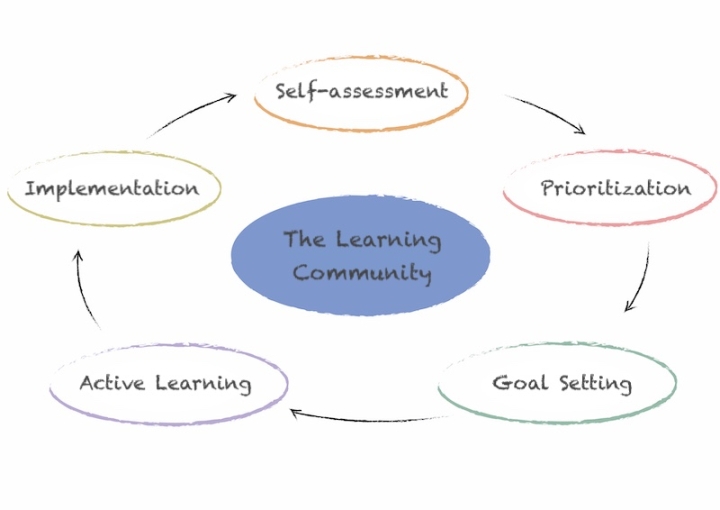
Many leaders find it helpful to adopt a simple rhythm that can be revisited throughout the year:
Reflect – Who are we as a school?
Discern – What is God inviting us to strengthen or change?
Connect – Which communities and resources can support our calling?
Act – What is one strategic step we can take together?
Review – What fruit is emerging in our students, staff, and community?
This rhythm helps ensure that mission remains active rather than assumed. It also models to teachers and students that faithful leadership involves both conviction and learning.
Strengthening Impact Together
Across Europe, schools are at different stages of development. Some are newly established and building foundational structures. Others are navigating increasing cultural pressure or financial uncertainty. Still others are seeking renewal after decades of faithful service.
In every context, collaboration remains one of the greatest strengths of the Christian school movement. By learning together, sharing resources, and engaging in common improvement processes, schools can strengthen their long-term impact.
When mission conviction is supported by strong systems and intentional leadership, Christian education becomes more than a vision—it becomes a lived reality. Students experience coherence between what is taught and what is practiced. Teachers grow in confidence. Communities gain trust in the school’s purpose.
We encourage leadership teams to revisit the reflection questions shared throughout this series and consider how structured tools such as CSIP might support a deeper process of alignment in the coming months.
The goal is not simply institutional improvement. It is greater faithfulness to the mission God has entrusted to your school—and a stronger formation of the next generation in truth, wisdom, and faith.

In Memory of Bert Vogel
In loving memory - with deep gratitude and firm trust in his Lord and King, ACSI Europe remembers Bert Vogel, who went to be with the Lord after one year of illness on February 14, 2026.
ACSI Day of Prayer 2026
On February 24, 2026, join Christian school leaders, teachers and students around the world for a day of prayer. Resources are provided for schools to organize prayer-centered activities designed to focus our attention on God's presence and provision for His work through global Christian education.
Standing in the Gap
In January 2026, leaders from across Europe gathered in Brussels for the General Assembly of the European Association for Christian Education (EACE). With 44 participants representing 20 countries, the meeting offered a rich space for reflection, strategy, and collaboration at a time when Christian education in Europe faces both growing pressures and new opportunities.
The Hope of Christmas
As the season of Advent unfolds, Christian school communities are given a unique opportunity to pause and reflect on the true hope that Christmas brings. This hope is not simply a warm feeling of holiday cheer, but a deep confidence rooted in the reality that God has come among us in Jesus Christ.
