
Welcome to our SLC UK Chaperone portal
Where you can find all the information you need....

Registration
Thank you for registering your team to our upcoming Student Leadership Conference!
Please provide details for each participant as soon as possible using the secure link sent by email.
- We need the full name of all participants as it is shown in their traveling documents (ID or passport) for the official registration of the accommodation.
- There is an option to give us the preferred name which we use for the name tags.
Schools must provide 1 designated chaperone for every 10 student participants. We strongly recommend both male and female chaperones if your group is mixed.
A late fee of 20% will be charged if we do not receive your student names and data before September 7.

Team preparation
A quick guide for School Leaders and Chaperones
SLC is more than an event! We trust that SLC inspires you and your students in their leadership journey. How you prepare your student leadership team will impact how much they can benefit from the experience and contribute to their communities as a result.
Setting Your Vision
Why are you and your students participating in SLC? Answering this question will guide how you work through the process of preparing your team and engaging with SLC.
- How do you hope that your school will be different as a result of having students participate in SLC?
- How will participating in SLC contribute to the mission and vision of your school?
- How does participating in SLC align with the core values of your school?
- How will participating in SLC contribute to your school’s strategic goals?
Selecting Your Team
It is important to carefully consider which students will participate in SLC, as not all students who are interested will be ready to benefit and contribute. Before promoting SLC to students…
- Establish a set of criteria for selection (for example; demonstrating Christian character, being involved in leadership or service).
- Determine whether or not there is a limit to the number of students you can have on your team, and if so, what that maximum number is.
- Develop an application process that is aligned to your criteria. This could include a written application, seeking referrals from teachers, an interview.
When inviting students to apply to participate in SLC…
- Share your vision for SLC in a way that inspires students to be involved.
- Outline the application process, and the reasons for the process.
- Have all of the practical details available in writing so that you don’t need to spend time on them.
- Prepare a written communication for parents of prospective participants.
Preparing Your Team
Once you have selected your team, begin meeting with them regularly in order to…
- Pray for and get to know one another. Establish a sense of teamwork and belonging.
- Brainstorm areas of opportunity or need in their community that they could address in their action plan. (See “Guiding the Action Plan” for more help on this).
- Address practical issues (eg. travel arrangements, behavioural expectations).
Consider also holding a parent meeting to ensure that they understand the why and the what of SLC.
The ACSI team will meet with chaperones for an online orientation 2 or 3 weeks before the event. Please plan to meet as we review the program, introduce the speaker, answer questions and pray together.
Funding Your Team
While the ACSI Europe team works hard to keep the costs to a minimum, there is no getting around the fact that SLC comes with a price tag. However, this reality can be turned into a valuable leadership learning experience. While it is good for the school to invest in their student leaders by providing some of the funds needed, the students can take responsibility for the rest. Work with your student team to…
- Determine the total costs involved in participating in SLC, and how much they need to raise.
- Brainstorm ways of raising the needed funds through providing goods and services (for example; selling baked goods, washing cars) or writing letters to potential donors/sponsors.
- Select the best ideas, develop a plan, and follow through.
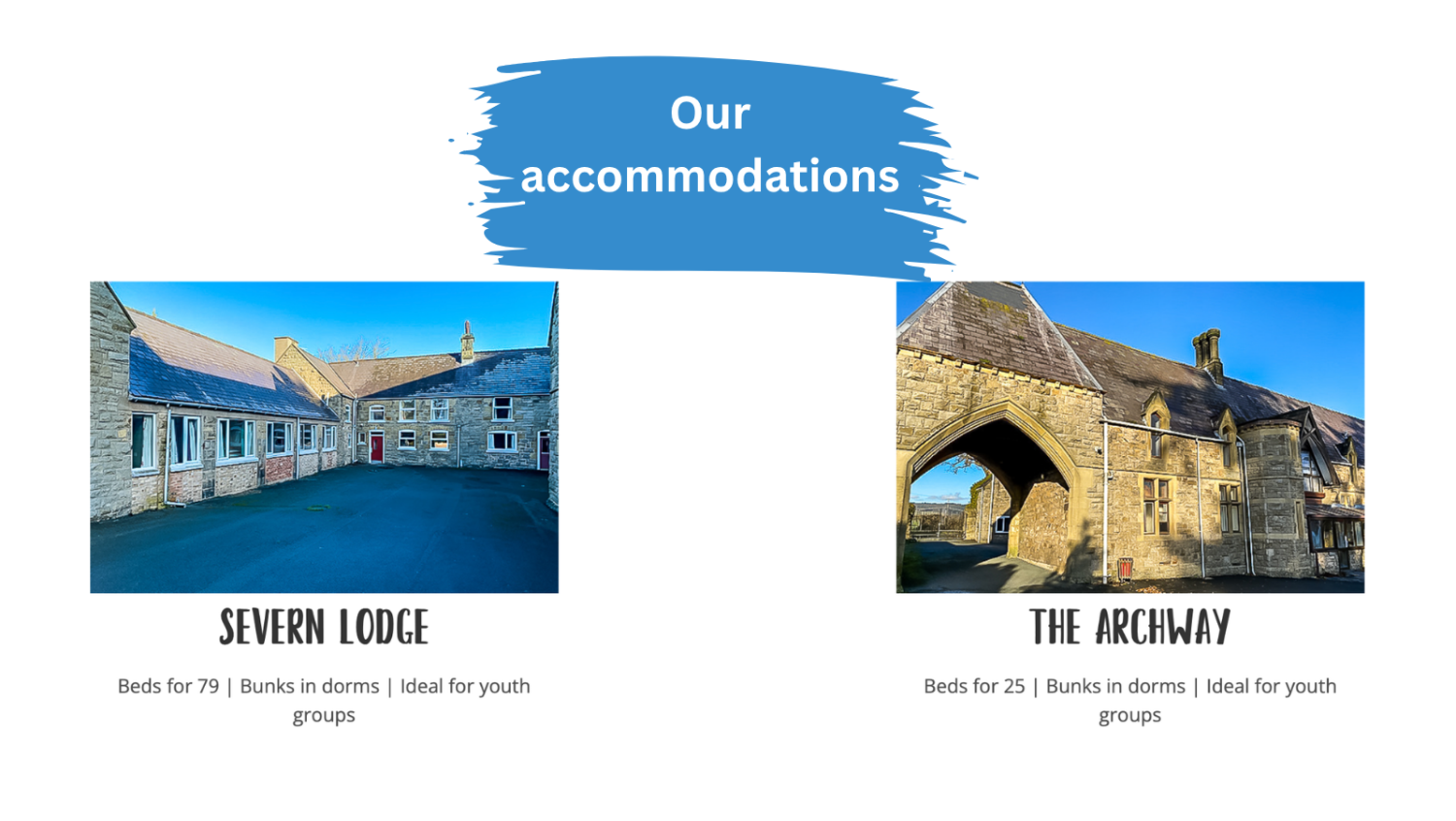
Accommodation
What to bring:
- Bible and notebook
- A variety of clothing for possible rain and temperatures between 10-20 C. Check the weather before you come to be more confident.
- Toiletries and your own towel
- Games or sports equipment for use during free time and school-to-school activities - some equipment will already be available on site.
- Bed linens are provided by the conference center - NO need to bring your own
- Leave behind anything which might distract or take time away from interacting directly with others or may cause harm to yourself or others. Phones and other electronic devices will not be allowed for students except at designated free time or as managed by chaperones. Do not use headphones because this disconnects you from any face-to-face conversations or interaction.
The lodges are next to each other with boys in one and girls in the other for sleeping arrangements. Both buildings have meeting areas, game rooms and dining rooms, which will be used for our activities, main sessions and workshops.
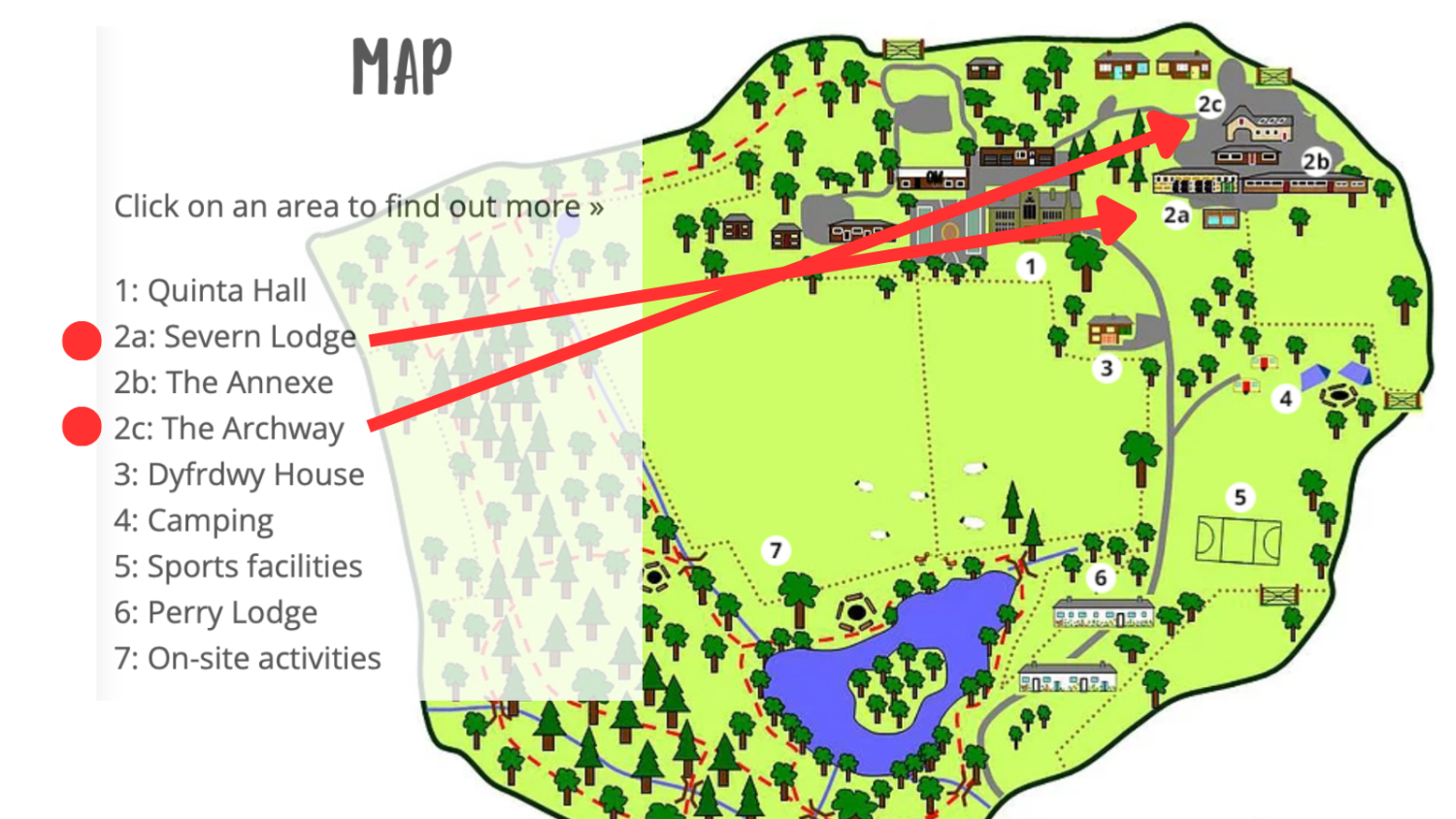
Only a few rooms have private bathrooms.

Travel and Logistics
How to get to the conference site
Address of the site:
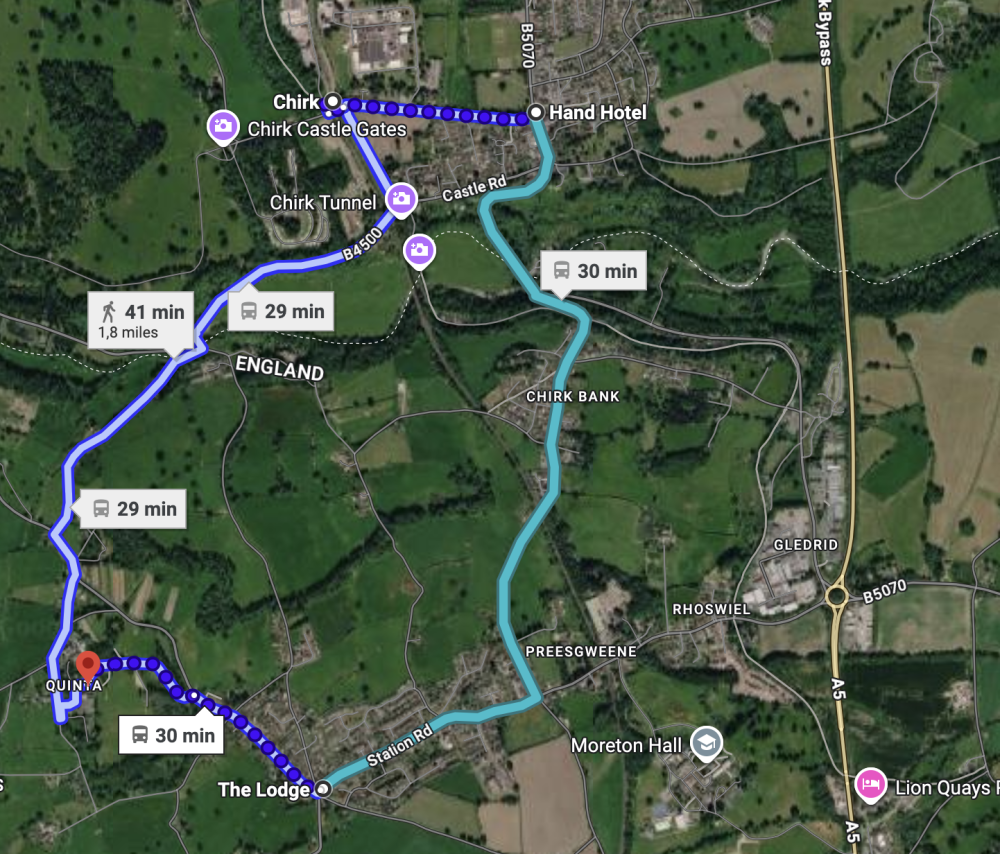
Quinta Hall, Quinta, Weston Rhyn,
Oswestry SY10 7LR, United Kingdom
Telephone: +441691773696
Traveling by train will likely get you the Chirk train station, which is about a 40 minute walk (1.8 miles) from the Quinta conference site.
ACSI will have a van on-site to help with transporting luggage as we are able.

Links to required forms
REQUIRED for all chaperones and staff:
Safeguarding Policy 2026 - here
One coversheet per group with 1 medical release per person:
Medical Consent Form - here
Code of Conduct - required for all students with signature from a guardian

SLC Program
Elements of the SLC Program
General Sessions
(Wednesday evening, Thursday Morning, Thursday Evening and Friday Morning)
These general sessions involve everybody coming together for a time of worship through singing and to hear a plenary talk. Since we believe that God’s Word speaks to us and is our guide for everything we do, these talks are grounded in Scripture, but will also have strong applications to leadership.
In order to make the most of these sessions, please encourage and help your students to:
- Read the Scripture passages ahead of time. The Bible references will be posted in the online learning environment that you will have access to a week before SLC. If English is not the language you usually read the Bible in, read the passage in an English translation as well as in your own language so that you are familiar with the vocabulary. Bring your Bible to the session.
- Pray for the speakers, that they will faithfully declare God’s Word to us. Pray for yourself and other participants, that God would move and change us.
- Listen attentively and openly. You may not agree with everything the speaker says, but allow God to challenge your thinking, feeling and acting. It is important to discuss any questions you have.
- Take notes during the sessions. An outline will be printed in the conference book, along with space for taking notes. Write down ideas that you want to remember or think through more, and questions you want to ask your teachers or parents.
It is always a good practice to set an example for your students by following the same practices.
Discussion Groups
(Immediately following each general session)
Student will be assigned to a discussion group that will include 7 or 8 other students from different cultures and schools, facilitated by a fellow student. Each group will have one hour after each session to share with each other what they learned during the session and how God is speaking.
In order to make the most of discussion group times, encourage your students to:
- Read the discussion questions ahead of time and check that you understand the English vocabulary. Discussion questions will be posted in the online learning environment before the conference, and printed in the conference booklet. (Which can be done as a school team.)
- Be at all discussion group sessions and use all of your time.
- Be willing to be uncomfortable. If you love to talk - listen! If you are shy - talk!
- Don't assume you have the only answer OR that your idea is not important. The purpose of the group is to share ideas and learn from each other, not to get a “correct” answer. It is OK to have a different opinion than others. Ask questions to help you understand what they are saying and why.
- Have fun! This is a unique opportunity to build friendships with others from around the world.
If a student would like to be a discussion group leader…
- This must be decided at the time of registration and communicated to the ACSI Europe team on the participant data list.
- Be aware that facilitating a discussion is a complex task. If the student is not confident with English, this is probably not a good role for them.
- Students will need to participate in an online preparation course beginning in August. Please make sure that you provide ACSI with an email address (in the participant list) so that students can get started on this before returning to school.
- If students are not leading a discussion group, help them come to SLC willing to exercise leadership by being an active participant during discussion times.
Workshops
(Thursday morning, Thursday afternoon, Friday morning)
Workshops are an opportunity to explore a practical issue related to leadership with a group of students who are also interested in the topic, under the direction of an experienced chaperone. Students can choose a different workshop for each of the three sessions. Workshops are interactive, and include time for asking questions.
In order to make the most of workshops, encourage and help your students to:
- Read through the list of workshop options that will be provided 2 weeks before SLC. Prayerfully consider which topics will be most relevant for their growth as a leader. Discuss your choices in your school group, so that they can plan to attend different workshops and share what each has learned with each other later.
- Be willing to ask questions when they don't understand.
- Use the opportunity to get to know a chaperone from a different school and learn as much as possible from them. This increases their network of positive adult influences in their lives.
- Think about how this teaching or idea applies to their life and circumstances. Use the new information soon so by teaching someone else or applying it to something they face now.
NOTE that there are separate workshops for chaperones which are designed to support the development of student leadership programs in our schools, increase our collaboration and fellowship, and have time to pray together. Chaperones should NOT attend student workshops unless they are leading them.
School Debriefing Time
(Wednesday evening, Thursday evening, Friday afternoon)
Debriefing time is important time together with your school group designed to share what you have learned during the day, pray with and for each other, and develop your school action plan. These times will be led by the chaperone.
In order to make the most of debriefing times, encourage and help students to:
- Be willing to share openly about how God is speaking through SLC. Be honest about joys and struggles.
- Listen carefully to what peers have to say. Ask questions to show interest in others' ideas and get a better understanding of what is important to them.
- Pray for each member of your group individually, and for the group as a whole.
- Be courageous with your action plan. Be willing to try something that is risky and requires a lot of effort. Try to think “outside the box” (beyond what is normally done in your school).
Interaction Time
(All meal times, Thursday afternoon, Friday afternoon)
Interaction time is important for developing new friendships at SLC. This happens mostly in an unscheduled way in between other elements of the program. Some fun activities will be organized by chaperones, but the rest is up to you!
In order to make the most of interaction times, encourage and help students to:
- Be inviting and inclusive. Avoid sitting only with friends at meal times, or hanging out only with friends between sessions. Reach out to others who seem to be alone and invite them to join in.
- Look for members of your discussion group, or those you have met in workshops. Take some time to get to know them better. Ask questions about their school, their church and their country.
- If English is your first language: Be patient! Let those who are less confident with English have space to find the words they need.
- If English is not your first language: Be brave! Your English expression does not need to be perfect for your new friends to understand what you are trying to say

Action Plan
Guiding students in preparing their action plan. Some ideas for chaperones.
What is an “Action Plan”?
An action plan is a project that your students develop during their time at SLC that they can implement together when they return to their school. The purpose of this activity is to encourage students to apply the leadership character and skills they are learning at SLC by serving their school and community in a meaningful way. This intentional and practical application increases the sustainability of the lessons learnt during the conference. During SLC you will have time with your students each day to work on the plan, and on the final evening your group will have the opportunity to share their plan with other schools.
Your role in guiding your students as they prepare their action plan is an important one. While it is their action plan, they are inexperienced and look to you for advice, boundaries and resources. It is likely that you will need to play a more direct role in initiating the process, but become less direct as it unfolds and students take ownership and responsibility. This is a wonderful opportunity for you to model for them what this collaborative, empowering style of leadership looks like.
The ideas below are an outline of how you might engage in this process. They are not offered as a list of steps to follow, but are designed as a prompt for your own creative ideas – which we would love you to share with us and other chaperones!
Before SLC
Start early and start positive!
1) Have your students make a list of ways that they already see God at work in their school, or the best and most unique features of their school. Encourage them to share stories of how they have experienced these things and how it has impacted them and others in positive ways. You could use the mind-map provided (or your own version of it) by having students fill it in individually on a single sheet of paper, then share ideas to create a combined version on a large poster, bulletin board or electronically.
2) Discuss the question: What would our school look like if these good things that God is already doing were “taken to the next level” (multiplied, amplified, magnified)? Students could add ideas to the mindmap, or create a diagram or picture of inspiring images or ideas of what their school is becoming. How might God be calling us to participate with Him in this?
3) Encourage the students to prayerfully choose a particular idea or image to focus on as they prepare their action plan. Try to form a challenging goal that the action plan will seek to achieve.
During SLC
Make the most of your de-brief times!
1) Revisit your chosen idea/image or goal and adapt or refine it based on what students are learning during SLC. Choose a completely new goal if something comes up that inspires the whole group.
2) Brainstorm strategies for achieving your goal. Get a variety of ideas “on the table”, then discuss the possibilities and connections between them before deciding on which strategy (or strategies) you will use. You could use the planning sheet provided, or your own version of it, to help with this.
3) Discuss the resources that will be required to implement your plan.
4) Some reflective questions to discuss before committing to the final plan: Guiding students in preparing their action plan Some ideas for chaperones.
- How challenging is this plan for us? Have we chosen to do something that is possible, but will stretch us and cause us to depend on God in new ways?
- How beneficial will this plan be if we are successful? Who will benefit? Have we chosen to do something that will meet the needs of others, or our own?
- How committed are we to this plan? Are we willing to be faithful, to persevere to see this plan through when problems or opposition arise?
After SLC
Encourage your students to follow-through on their plan.
1) Schedule regular meetings for a period of time after SLC to work on the plan and its implementation. It is likely that the debrief times at SLC will only be enough to sketch out your plan, so your group will need time to work together on the details.
2) Help your students break down their plan into smaller elements and/or steps to take, and to negotiate responsibility and accountability for different tasks.
3) Connect your students with others who can help them achieve their goal.
4) Help your students carefully plan how they will communicate their action plan with others and invite their participation.
5) Ask your students questions that help them reflect on and learn from the experience as they go, especially when it isn’t going well.
- What has been working well on our plan so far? Why is it working well?
- What challenges have we faced? How have we responded to those challenges? How could we respond differently?
- What changes/adaptations do we need to make to our original plan?
6) Celebrate successes with your action plan.
And one final suggestion that is so obvious it needs to be stated: “Pray without ceasing” (1 Thessalonians 5:17). However you engage in this process, you and your students need God’s inspiration, wisdom and enabling.
We are praying for God’s blessing on you and your students.