
Facing the Culture with Humility plus Gratitude
One of my favorite countries is Nigeria. In the rural areas they have a unique greeting. Instead of first saying, “Hi, my name is …” the first thing they say is, “You are welcome.” Can you imagine that kind of hospitality? The Nigerians have been rated one of the happiest people groups in the world despite the difficulties they suffer. But they’ll tell you they have some Achilles’ heels, including issues with promise-keeping and truth-telling. They grapple with corruption, especially in their government.
Dr. Christine Pohl of Asbury Theological Seminary talks about four key pillars that are important to communities of faith—and that I would argue are important to the culture of Christian schools. They are hospitality, gratitude, promise-keeping, and truth-telling.
 How is Western culture doing with these four pillars? What are some of our culture’s Achilles’ heels? We need to examine that in the milieu our young people are growing up in. In A Practical Guide to Culture, John Stonestreet argued that several cultural waves are sweeping across the United States right now that consistently pound our students. They include pornography, affluence and consumerism, and entertainment. It’s challenging for our students to respond biblically to a culture that’s becoming increasingly post-Christian.
Our students face another cultural challenge: the prevailing religion of today is moralistic therapeutic deism, according to Dr. Christian Smith of Notre Dame University. Dr. Smith has conducted research in terms of spiritual formation and spirituality in young adults and come up with this concept. Deism is the idea that there’s a supreme being who is not engaged in every detail of our lives. And there are morals, but they’re embedded in a therapeutic model. So I can cobble together morals that make me feel good, and if it works for me, no one can question it. There’s no absolute law I need to humble myself to, no almighty God. That “religion” prevails even in our Christian schools.
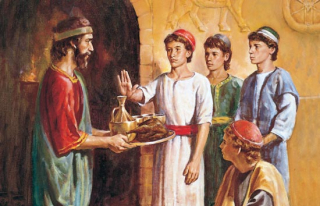 But we have hope because cultural challenges are nothing new. Thousands of years ago four teenagers— Daniel, Shadrach, Meshach, and Abednego—were ripped out of their culture and placed in a hostile culture, and they had to figure out how to navigate it. Daniel rose up to be second-in-command of the kingdom, and at one point his enemies said, “You will never find any fault with this man unless it has to do with the laws of his God” (Daniel 6:5). What an incredible testimony of integrity. That was what preceded the story of Daniel in the lion’s den. How can we raise up a generation of modern-day Daniels, Shadrachs, Meshachs, and Abednegos to engage our culture for the cause of Christ?
One way to do that while confronting our culture’s lies is to teach and model the concept of humility coupled with a heart of gratitude. Humility is the preamble to gratitude. We have to humble ourselves that God may exalt us at the proper time (James 4:10). The apostle Paul says we rejoice in our sufferings, because suffering produces perseverance. And perseverance produces character. And then there’s this amazing concept that character produces hope. And hope produces the love of God poured into our hearts through Christ Jesus, and we will not be disappointed (Romans 5:3–5).
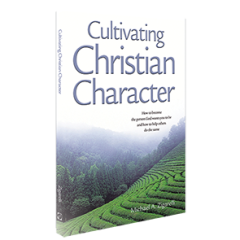 In Cultivating Christian Character, Dr. Michael Zigarelli wrote about research he conducted among 35,000 believers worldwide. As a result he came up with three key variables that differentiated between immature Christians and mature Christians. One of them was so powerful that you could not be in the “mature” category if you did not have it. It was a heart of gratitude.
Think about that. If our culture’s Achilles’ heel is “it’s all about me,” and if gratitude is a core variable to spiritual maturity, we’ve got a lot of work to do. How do we intentionally help our students cultivate a heart of gratitude? How do we intentionally do that ourselves?
I’m asking you to consider those questions and to be the one to demonstrate humility before an almighty God by cultivating a heart of gratitude.
Daniel Egeler, EdD
DR. DANIEL EGELER grew up on an isolated island in Lake Victoria, Tanzania, where his father was an "island evangelist." It was here that he learned the art of relating oral history from his African elders. Dan has served as the President for the Association of Christian Schools International in Colorado Springs, Colorado. Dr. Egeler and his wife, Kathy, have four children: Andrew, Danielle, Matthew, and Bethany. They live in Colorado Springs.

The week after SLC
The week after SLC or any event that challenges student growth is a huge opportunity - don't miss it! Many of our students are teenagers in European schools where living out a Christian faith can be difficult, where speaking up takes courage that does not come naturally, where identifying as a Christ-follower may not be received be warmly. How will we as teachers and school leaders engage them in their next steps of faith and leadership?
ACSI Europe Art Show Winners 2026
We would like to congratulate all the wonderful students who participated in our first ACSI Europe Art Show responding to the theme of "Your word is a lamp to my feet and a light to my path.". We were very encouraged to receive over 60 art pieces from schools all across Europe — a remarkable debut for this new tradition.
Poetry Contest Winners 2026
Announcing our first ever ACSI Europe Poetry Contest winners... Students were invited to respond to the theme of "Oh how I love Your law" — drawn from Psalm 119:97 — expressing their faith in their own words, in their own language.
2026 school year in review - Thank You
As another school year comes to a close, we find ourselves pausing — as we should — to ask a question that matters more than any metric or milestone. What has God been doing through Christian schools in Europe this year?
The answer is larger than any one school, conference, country, or organization. It is a story told in classrooms and conference halls, in student testimonies and teacher conversations, in policy discussions at the European Parliament and around the graveside of a faithful servant.
