
News report from a German school student group at SLC 2018, provided by one of the student participants.
On the 25th of September our journey began. We were 13 students from the EF-Q1 together with our two teachers Ms. Buller and Mr. Schot. After waiting several hours at the airport, our flight was canceled and we had to go back home with cabs and come back the next morning to catch the next plane. First we all were a bit disappointed, but looking back at this event, we realized it actually wasn’t that bad. During the waiting time, Moritz, who brought his guitar (he was going to play guitar at the conference), unpacked it and we sang worship songs together in the middle of the airport! A few people then came up to us and asked our teachers who we were, where we came from and what we planned to do, so Ms. Buller and Mr. Schot had the opportunity to talk about our christian school and about the leadership conference where we were going!
The next morning, Mira and Amy experienced how God used them to get into a conversation with the cab driver and talk about their faith in God. Before arriving at the airport, he asked them to pray for him - how amazing is that! God works in so many different ways, even through cancelled planes!
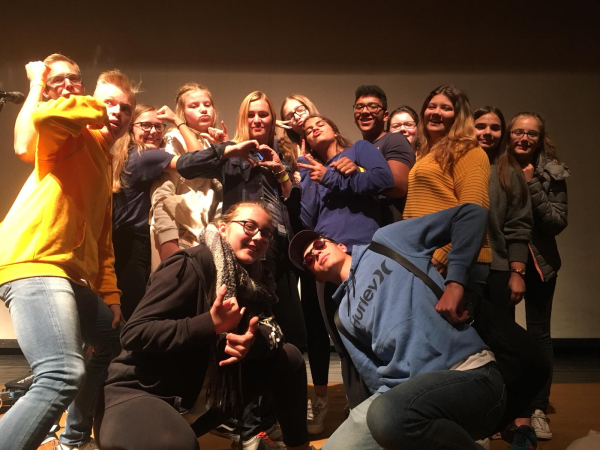
After some sightseeing in Budapest and travelling to the campus, we met the other 400 students attending the conference. Our teachers encouraged us not to stick together as a German group, but to spread out and meet new people. It wasn’t easy at first since there were people from 15 different countries, so we had to communicate in English, but after a while we got used to it and talked English automatically.
The theme of the conference, “the pathway of leadership” has been presented to us in five sermons focusing on relationships, making right choices, using opportunities, withstanding trials and commitment to growth. After each sermon, we were split up into groups of eight. These groups were going to be our discussion groups, in which we would discuss about issues related to the message we just heard. Through a wide range of workshops, worship time and having fellowship during free time at the lake nearby we were really blessed and encouraged to grow in taking over responsibility, to serve others and to honor God!
At the end of the conference, we got together and made a school action plan. Since the Q1 already had created one last year, we practically stuck to it and just added some ideas and made some small changes.
Something that I learned most about this conference, was that it doesn’t matter what language you speak or what you look like or what your culture is, we all have one thing in common, and that is that we have Jesus Christ in our hearts and that through him we have common ground.

The week after SLC
The week after SLC or any event that challenges student growth is a huge opportunity - don't miss it! Many of our students are teenagers in European schools where living out a Christian faith can be difficult, where speaking up takes courage that does not come naturally, where identifying as a Christ-follower may not be received be warmly. How will we as teachers and school leaders engage them in their next steps of faith and leadership?
ACSI Europe Art Show Winners 2026
We would like to congratulate all the wonderful students who participated in our first ACSI Europe Art Show responding to the theme of "Your word is a lamp to my feet and a light to my path.". We were very encouraged to receive over 60 art pieces from schools all across Europe — a remarkable debut for this new tradition.
Poetry Contest Winners 2026
Announcing our first ever ACSI Europe Poetry Contest winners... Students were invited to respond to the theme of "Oh how I love Your law" — drawn from Psalm 119:97 — expressing their faith in their own words, in their own language.
2026 school year in review - Thank You
As another school year comes to a close, we find ourselves pausing — as we should — to ask a question that matters more than any metric or milestone. What has God been doing through Christian schools in Europe this year?
The answer is larger than any one school, conference, country, or organization. It is a story told in classrooms and conference halls, in student testimonies and teacher conversations, in policy discussions at the European Parliament and around the graveside of a faithful servant.
