
The week after SLC
The week after SLC or any event that challenges student growth is a huge opportunity - don't miss it! Many of our students are teenagers in European schools where living out a Christian faith can be difficult, where speaking up takes courage that does not come naturally, where identifying as a Christ-follower may not be received warmly. How will we as teachers and school leaders engage them in their next steps of faith and leadership? 
The 2026 Student Leadership Conferences have now concluded in Hungary — more than 340 students gathered, and have now returned to their schools with a vision for what God might do. We know what that means because they told us.
They told us they want to engage in meaningful ways in their schools and with their peers, that prayer no longer feels stressful, that they feel called to speak up for their Christian identity. They want to be a light in the darkness. They now understand they are not alone — that there is a large Christian community across Europe, and they belong to it.
They came home with all of that. The question we want to put to you — as their teacher, their mentor, the adult in their school community who knows them — is this: Are you ready for them?
We asked students what changed. Here is what they told us:
"SLC really brought me closer to God and gave me the wisdom and confidence to start Christian activities in our school. It lit a fire inside me, and I feel a calling from God to help others grow closer to Him."
"My relationship with God has really strengthened, and I've learned to pray so much that it's no longer stressful to pray. I want everyone to have a personal relationship with God and help them do so."
"It made my faith simple again and allowed me to confess with my whole heart that I'm a child of God. I want to be a leader who dares to speak up for our Christian identity."
"It challenged me to really question my priorities and to do what is right, even when it is hard. It challenges me to step up into a leadership role when I get back home and use that leadership to change myself and others for the better."
"Seeing so many Christians my age helped me realize that we are not alone. It taught me how to do hard things with the Holy Spirit and to be a good example to others."
"SLC helped me become bolder and deepened my relationship with God. It has equipped me with knowledge that I can start using now to serve others more effectively."
"I was challenged to look at my relationship with God and evaluate what I needed to change in order to fully commit myself to God and His plan for me. The speakers and workshops really spoke into my life and helped me understand some key things about following Christ." 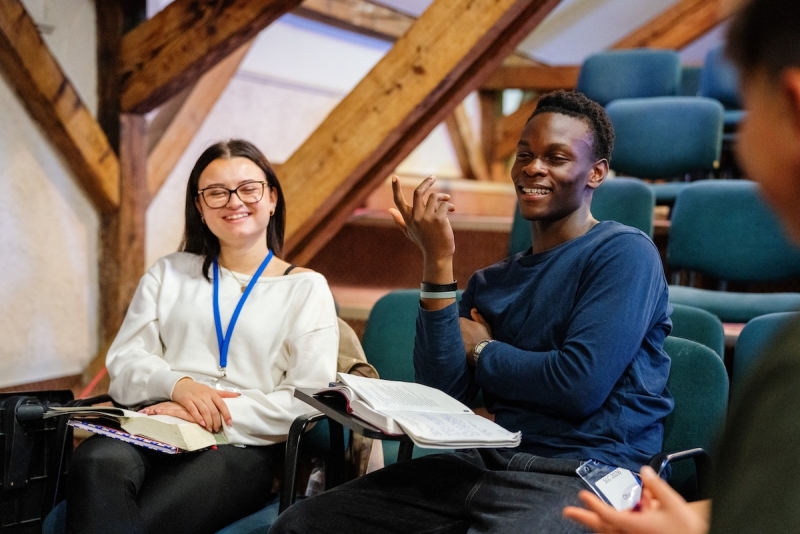
Notice what these students are not saying. They are not saying SLC was enjoyable. They are not saying the food was good or the worship was energetic. They are saying: I want to do something when I get back. I feel called. I want to start something. I want to step up. That is not the end of a formation process, but the beginning of one. This is the beginning that most needs you.
Stepping into new territory
The theme of SLC 2026 — Be Strong and Courageous — comes from the moment God speaks to Joshua at the edge of the Promised Land. Joshua is not being told to feel confident. He is being told to act — to move forward into a territory that is genuinely unknown, with a promise that the one who goes ahead is more reliable than anything he can see from where he stands. Your students are standing at a version of that threshold.
Whether or not your students attended SLC, we must be ready to follow up on what God is doing in their lives. What will you ask your students when they come home? What space in your school community will be ready to receive what they are carrying? What leadership opportunity could be waiting for them when they arrive? The week after SLC or after any challenge toward growth is not the time to give students space and see what happens. It is the time to ask a direct question.
Here are some suggestions:
Ask the question and listen to the answer. Find a few minutes with every student who attended SLC. Spend time one to one, or in the small group that travelled together. Ask what they are leaving SLC with, what they feel called to, what they are afraid of. Then listen without jumping in, advising or organising. Listen first.
Connect their calling to something real and reachable. The student who wants to start something new does not need a full programme design. She needs one first step that is within her actual reach — a conversation with a teacher about a lunchtime group, a friend she will invite to pray with her, a Scripture she will put on her locker. Help her identify the smallest faithful next step, not the most impressive one.
Create the conditions in your school that SLC created for a week. The feedback from SLC students is consistent: the most formative moments were in small groups, in genuine conversation, when they felt genuinely known and were genuinely challenged. Your school does not need to replicate a conference. It needs to ask: where in our school community does a student experience being genuinely known, genuinely challenged, and genuinely part of something larger than themselves? There is always space for this.
Give them responsibility, not just opportunity. The student who said they want to "step up into a leadership role" does not only need an event to attend. They need something to carry — a real responsibility, with real value, in the community they are already part of. Student-led prayer, peer mentoring, planning the school's worship or service opportunities — these are not extras. They are the formation context that SLC plants and your school must sustain.
Remember that this is God's work in them, not yours. The most important thing you can offer a student returning from SLC is not a programme or a platform. It is the witness of an adult who takes their calling seriously — who is themselves walking with God, still learning, still growing — and who treats the student's calling as something real. That is not something you organise. It is something you are.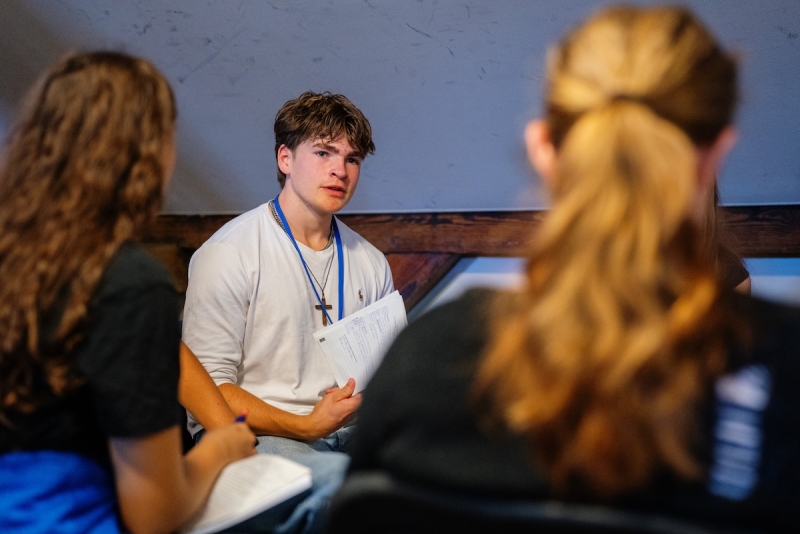
SLC is not the destination
SLC is only a catalyst — a concentrated week designed to ignite what your school then has to sustain, week by week, through the relationships and responsibilities and ordinary moments of school life where formation actually happens.
That is your work. It may not often produce immediate visible results. But it is exactly the kind of faithful, patient, relational investment in young people that Christian schools exist to make. It is what the students who come home from SLC are waiting for someone to offer them.
Be strong and courageous. Be ready for them!
"Have I not commanded you? Be strong and courageous, do not be afraid, for the Lord your God is with you wherever you go." Joshua 1:9

The Hope of Christmas
As the season of Advent unfolds, Christian school communities are given a unique opportunity to pause and reflect on the true hope that Christmas brings. This hope is not simply a warm feeling of holiday cheer, but a deep confidence rooted in the reality that God has come among us in Jesus Christ.
Digital Citizenship Education from a Christian Perspective
The Council of Europe’s framework, “Easy Steps to Help Learners Become Digital Citizens” (2023), defines three domains for development: Being Online, Well-Being Online, and Rights Online. But what does digital citizenship mean for Christian schools whose mission is grounded in Scripture rather than in secular definitions of the human person and society?
October 2025 Highlights
Thank you for your partnership in the ministry of ACSI Europe! We would like to give you an update on the highlights of our recent activities and also request your prayers for some important upcoming programs.
SLC report 2025
Praise the Lord for His faithfulness and blessings poured out during the ACSI Student Leadership Conferences (SLC) this year! These gatherings brought together students and chaperones from 47 schools across Europe for a time of worship, discipleship, and leadership growth centered on the theme “Leaders Who Love Truth.”
