
The times are “dark”, but Christian schools in Europe are growing
ACSI Europe leaders, Laci Demeter and Paul Madsen, participated in meetings with 30 other Christian education leaders in January 2024 at the EU Parliament. These meetings take place every year and are hosted by VGS and VEBS at the invitation of a Dutch MEP. The following summary provides a snapshot of the longer article on CNE News.
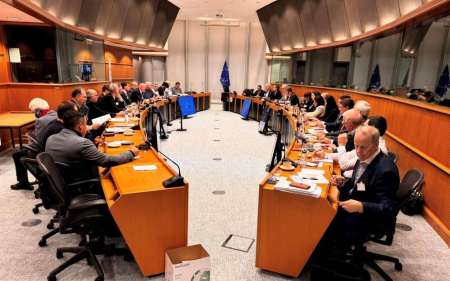
The Brussels Considerations conference brought together Christian school leaders from 13 EU member states, marking the first time in years that the number of Christian schools is on the rise. Pieter Moens, chair of the Association for Reformed Education in the Netherlands (VGS), noted that after a decade of stagnation, plans for new schools are underway in Sweden, the UK, and Spain, despite challenges such as Sweden's hostile political climate towards religious schools.
Germany, in particular, is seeing significant growth, with plans for 5 new Christian schools this year. In Switzerland, although Evangelical schools face obstacles like financial constraints and teacher shortages, there is renewed interest, with two groups seeking to establish new schools. In Albania, Christian education is emerging, but financial support from the government is lacking. Similar challenges are reported in Belgium, Spain and Austria, where Christian schools struggle to find enough teachers who share their vision.
These developments reflect a broader European trend, driven by concerns over liberal approaches to gender and sexuality in public schools. In response, parents seek alternatives that align with their values. Additionally, in countries without established Christian schools, efforts focus on equipping Christian educators in public schools to impart Christian values to students. Despite challenges, there is a growing recognition of the importance of Christian education in Europe and a commitment to expanding its reach. The mission of Christian schools is not only to provide students with a foundation for life and learning that is based on the realities of both the spiritual and physical world, but also to instill a true sense of identity and purpose that recognizes the image of God in every individual and the responsibility we have to care for others and the world around us.
You can read the full article written by Joe-Lize Kruijsse-Brugge at https://cne.news/article/4085-the-times-are-dark-but-christian-schools-in-europe-are-growing

Spain's Christian Schools Take Steps Toward a National Federation
Evangelical Christian schools in Spain are preparing to take a significant step together. At the 5th Forum on Christ-Centred Education, held in Barcelona on 30–31 October 2026, educators will be presented with a project to form a national federation of Protestant Christian schools.
The week after SLC
The week after SLC or any event that challenges student growth is a huge opportunity - don't miss it! Many of our students are teenagers in European schools where living out a Christian faith can be difficult, where speaking up takes courage that does not come naturally, where identifying as a Christ-follower may not be received be warmly. How will we as teachers and school leaders engage them in their next steps of faith and leadership?
ACSI Europe Art Show Winners 2026
We would like to congratulate all the wonderful students who participated in our first ACSI Europe Art Show responding to the theme of "Your word is a lamp to my feet and a light to my path.". We were very encouraged to receive over 60 art pieces from schools all across Europe — a remarkable debut for this new tradition.
Poetry Contest Winners 2026
Announcing our first ever ACSI Europe Poetry Contest winners... Students were invited to respond to the theme of "Oh how I love Your law" — drawn from Psalm 119:97 — expressing their faith in their own words, in their own language.
